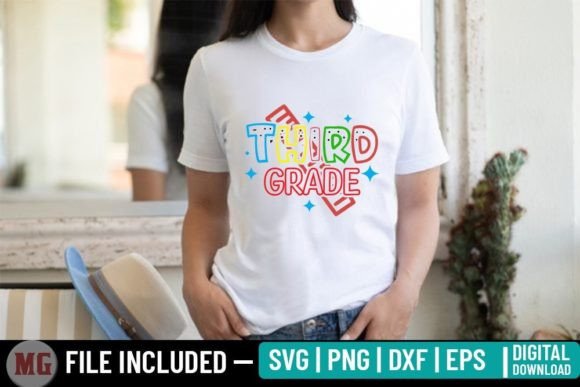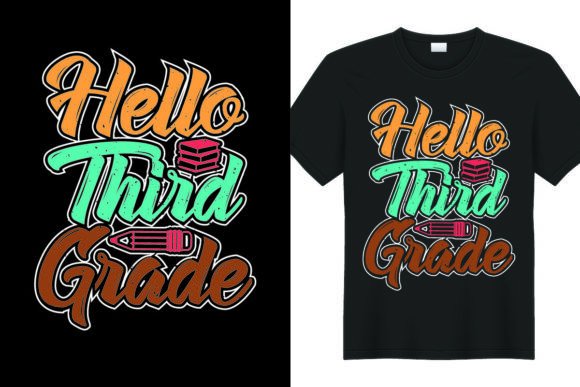
Back to School Hello Third Grade
A Designer’s First Look: Friendly, Focused, and Ready for Real Stitching
When I opened the Back to School Hello Third Grade design, my first thought wasn’t “cute” — it was “usable.” That’s rare. So many back-to-school graphics lean into cartoon chaos or overworked fonts, but this one lands with quiet confidence. The layout is clean and centered, with balanced spacing between “Hello” and “Third Grade,” and a subtle, hand-drawn charm in the letterforms — not too playful, not too stiff. It feels like something a third grader would proudly point to on their backpack, not roll their eyes at. I immediately pictured it stitched onto a natural canvas tote bag for a local boutique — simple fabric, no distractions, just clear, warm recognition.
Where This Design Truly Shines in Real Projects
Back to School Hello Third Grade works best where legibility and emotional resonance matter more than flash. Think sweatshirt embroidery for school spirit days, personalized baby onesies (yes — even for proud older siblings welcoming a new “third grader” in the family), or embroidered pillow covers for a classroom reading nook. As a tote bag design, it holds up beautifully at 4–5 inches wide — large enough to read from across a hallway, small enough to avoid overwhelming the fabric. On a lightweight cotton apron? Perfect. On a tea towel for a teacher’s welcome gift? Thoughtful and timeless.
It’s also a smart pick for commercial embroidery projects where consistency matters: think small shop merchandise for PTA fundraisers, craft fair bundles with matching patches and pins, or Etsy listings where buyers search for “third grade embroidery” or “back to school personalized gift.” The design doesn’t rely on trendy clipart elements — no apples, no pencils, no glittery stars — which means it ages well and fits seamlessly into brand-consistent collections.
Where to Pause — Not Problems, Just Practical Considerations
This isn’t a dense, high-detail applique design — and that’s intentional. But that simplicity means you’ll want to be thoughtful about context. On thin or stretchy fabric (like jersey t-shirts), the letterforms need proper stabilizer support; without it, the satin stitch edges can pucker or distort. On dark fabric, test your thread colors carefully — light yellow or sky blue may vanish unless you add an underlay or switch to white/cream for contrast. And while the design scales well down to ~3.5”, avoid shrinking it below 3” — the “g” and “d” in “Grade” start losing definition, and fine details blur in fill stitch.
Curved surfaces like caps or structured hats require extra attention. The horizontal flow of Back to School Hello Third Grade works on flat panels (front chest, center back) but needs slight digitizing tweaks for crown placement — not built-in, but easily adjusted by any experienced embroiderer. Likewise, layered garments (think hoodies with pockets underneath) benefit from a slightly taller hoop size to avoid stitching over seams. No dealbreakers — just smart prep steps.
How It Shapes the Finished Product — Beyond the Stitch
What surprised me most was how much Back to School Hello Third Grade elevates perceived value. On a handmade product, its clarity reads as care — not rushed, not generic. Customers notice that. A parent buying a custom-embroidered sweatshirt for their child’s first day of third grade isn’t just buying apparel; they’re buying pride, transition, and quiet celebration. This design delivers that tone without shouting. It builds trust because it looks professionally considered — not mass-produced, not overly cutesy, and definitely not licensed clipart repackaged.
For Etsy sellers and small shop owners, that translates directly to engagement: better photo mockups, stronger listing descriptions, and repeat customers who recognize your consistent, thoughtful aesthetic. And because it’s delivered as scalable vector assets (.SVG, .EPS) plus a crisp .PNG, it adapts cleanly to printable mockups, digital previews, or even screen-printed companion items — making it versatile design assets, not just a single-use embroidery file.
My Must-Do Checklist Before Stitching
- Test the design on scrap fabric matching your final project — especially if using textured or dark fabric.
- Check thread color contrast in both natural and artificial light; soft pastels often need brighter backing threads on deep backgrounds.
- Review stitch density visually — does the letter spacing hold up? Are corners tight, or do they look stretched?
- Confirm your hoop size comfortably accommodates the full width with at least ½” margin on each side.
- Inspect small details at actual stitch-out scale: the crossbar on the “H”, the curve of the “o”, the tail of the “y”.
- Run a black-and-white mockup to assess balance and weight — if it reads clearly in grayscale, it’ll work anywhere.
- Use cutaway stabilizer for knits, tear-away for stable wovens, and consider topping for napped fabrics like fleece.
- Verify licensing terms before selling finished items — this is a graphics file, not pre-digitized embroidery, so your own digitizing or licensed digitization is required for physical products.
Final Thought: A Design That Grows With Your Craft Business
Back to School Hello Third Grade isn’t flashy — and that’s its strength. It’s the kind of machine embroidery design that becomes a reliable staple in your library: adaptable across seasons, respectful of fabric integrity, and quietly meaningful for buyers. Whether you’re stitching a single personalized gift or building a cohesive line of school-year merchandise, it supports your voice instead of competing with it. In a market flooded with noise, that kind of calm clarity is worth its weight in thread.